
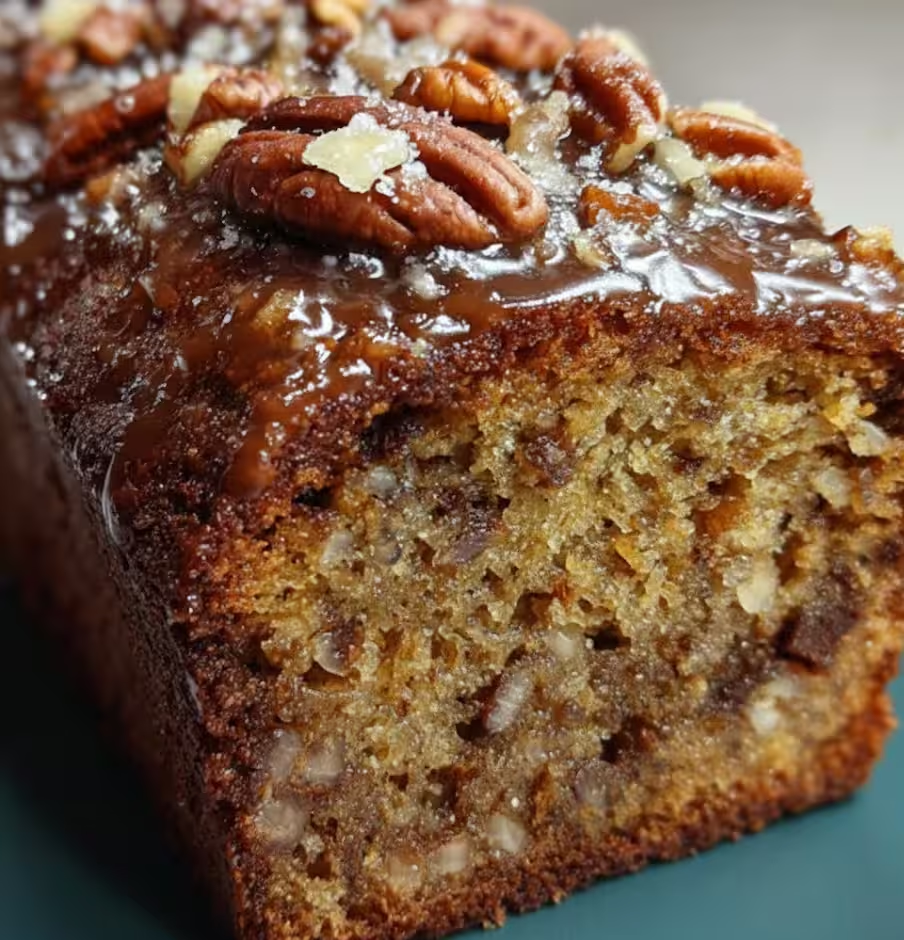
German Chocolate Pound Cake transforms the classic layered German chocolate cake into a stunning Bundt format — a dense, deeply chocolatey pound cake baked low and slow for a moist, tender crumb, then crowned with the traditional coconut-pecan frosting that has defined this American dessert since the 1950s. The technique borrows from both the pound cake tradition — creaming butter and sugar to aerate a rich, buttermilk-enriched batter — and the custard-based frosting method, in which egg yolks, evaporated milk, sugar, and butter are cooked together into a thick, glossy sauce before coconut and pecans are folded in at the finish. The result is a visually impressive, deeply satisfying dessert that delivers the full German chocolate flavor experience in a format that is easier to execute than a traditional layer cake and arguably more dramatic on the table.
Why You’ll Love This Recipe
- Bundt Format Makes It More Approachable Than a Layer Cake – All the flavor of a traditional German chocolate layer cake comes together in a single pan without the precision of splitting, leveling, or stacking layers — the Bundt’s architectural shape does the visual work that multiple cake tiers would otherwise require.
- The Low-and-Slow Bake Produces an Exceptionally Moist Crumb – Baking at 325°F for 60 to 70 minutes allows the dense, butter-rich batter to cook through evenly without the exterior drying out before the center sets — the defining advantage of a lower temperature for a thick pound cake.
- Buttermilk Is the Secret to Tenderness – The acidity in buttermilk reacts with the baking powder to produce a more tender, finer crumb than whole milk delivers, and its slight tang balances the sweetness of the sugar and the richness of the butter.
- The Frosting Is a True Custard, Not a Simple Glaze – Cooking the egg yolks, evaporated milk, sugar, and butter together into a proper custard before adding coconut and pecans produces a frosting with genuine depth, richness, and the characteristic caramel-like flavor that no shortcut version replicates.
- Make-Ahead Friendly at Multiple Stages – Both the cake and the frosting can be prepared a day ahead independently and assembled on the day of serving, making this one of the more stress-free impressive desserts available for entertaining.
- A Genuine Conversation Piece at Any Table – The combination of a tall, ridged Bundt cake draped in a glossy, textured coconut-pecan frosting that cascades down the sides is one of the more visually distinctive desserts in American baking, and it arrives on the table looking like significantly more effort than it required.
Ingredients You’ll Need
For the Cake
- 1 cup (2 sticks) unsalted butter, softened – the fat foundation of the pound cake; the creaming stage aerates the butter to build the structure and tenderness that defines the crumb; unsalted allows precise salt control throughout the recipe.
- 2 cups granulated sugar – beaten with the butter to create the air-incorporated, fluffy base that gives the dense pound cake its lift and sweetness; granulated sugar’s fine crystals dissolve completely during creaming.
- 4 large eggs – added one at a time to maintain the emulsion of the batter; each egg contributes structure, richness, and the binding proteins that hold the cake’s crumb together during baking.
- 2½ cups all-purpose flour – provides the gluten structure that gives the cake its body; the alternating addition method with buttermilk prevents overdeveloping the gluten, which would make the cake tough.
- ½ cup cocoa powder – the primary chocolate flavoring; use a good-quality unsweetened cocoa for the deepest, most complex chocolate flavor in the finished crumb.
- 1 tsp baking powder – the chemical leavening that provides the small amount of additional lift needed in a dense pound cake batter where the creaming stage does most of the work.
- ½ tsp salt – sharpens and amplifies all other flavors in the batter, particularly the cocoa and vanilla, and prevents the sweetness from tasting flat.
- 1 cup buttermilk – the liquid component whose acidity tenderizes the gluten, activates the baking powder, and produces the characteristically fine, moist crumb of a well-made pound cake; cannot be effectively substituted with standard milk without affecting the texture.
- 2 tsp vanilla extract – adds warm, aromatic depth that bridges the richness of the butter and eggs with the bitterness of the cocoa powder.
For the Coconut-Pecan Frosting
- 1 cup evaporated milk – the base liquid of the custard frosting; its concentrated, partially cooked milk solids produce a richer, more stable custard than fresh milk and contribute to the frosting’s characteristic caramel-like depth.
- 1 cup granulated sugar – cooks with the custard base to produce the sweet, slightly caramelized flavor that gives German chocolate frosting its distinctive richness.
- 3 egg yolks – the thickening and enriching agents of the custard; they coagulate as the mixture heats, producing the thick, glossy texture that distinguishes this frosting from a simple glaze.
- ½ cup butter – stirred into the custard base for richness and a smooth, spreadable finish once the frosting cools to room temperature.
- 1 tsp vanilla extract – added off heat to preserve its aromatic brightness in the finished frosting.
- 1 cup sweetened shredded coconut – folded in after the custard is cooked and off heat; provides the fibrous, chewy texture and sweet tropical flavor that are the defining characteristics of authentic German chocolate frosting.
- 1 cup chopped pecans – adds crunch, nuttiness, and a slight bitterness that contrasts the sweetness of the coconut and custard base; toast lightly before adding for the most pronounced pecan flavor.
Step-by-Step Instructions
Step 1: Prepare for Baking — Preheat the oven to 325°F. Thoroughly grease a Bundt pan with softened butter or shortening, ensuring every ridge and the center tube are well coated, then dust with flour or cocoa powder — cocoa powder is preferred here as it prevents the white flour residue that can appear on a dark chocolate cake’s exterior. Ensure all refrigerated ingredients — butter, eggs, and buttermilk — are fully at room temperature before beginning; cold ingredients will not cream or incorporate properly and will produce a denser, less even crumb.
Step 2: Cream Butter and Sugar — Beat the softened butter and granulated sugar together in a large mixing bowl using a stand or hand mixer on medium-high speed for 3 to 4 minutes until the mixture is pale, very light, and noticeably fluffy. This is the most important structural step in the entire recipe — the air incorporated during creaming is what gives the dense pound cake batter its rise and tender texture. Do not rush or cut this stage short.
Step 3: Add the Eggs — Add the eggs one at a time, beating well on medium speed after each addition before adding the next. This gradual incorporation allows each egg to fully emulsify into the fat-rich butter mixture without breaking the emulsion — adding all the eggs at once would cause the batter to separate into a curdled, uneven mixture that bakes unevenly.
Step 4: Combine the Dry Ingredients — Whisk the all-purpose flour, cocoa powder, baking powder, and salt together in a separate bowl until fully combined and no visible pockets of cocoa or baking powder remain. Pre-mixing the dry ingredients ensures even distribution throughout the batter and prevents cocoa lumps from appearing in the finished crumb.
Step 5: Alternate Dry and Wet Additions — With the mixer on low speed, add the dry ingredient mixture and the buttermilk to the creamed butter mixture in alternating additions — beginning and ending with the dry ingredients, using three additions of dry and two of buttermilk. Stir in the vanilla extract. Mix only until each addition is just incorporated — overmixing at this stage develops excess gluten that produces a tough, rubbery crumb rather than the tender, fine texture the recipe is designed to achieve.
Step 6: Bake the Cake — Pour the batter into the prepared Bundt pan and spread it into an even layer, gently tapping the pan on the counter once or twice to release any air pockets trapped in the ridges. Bake at 325°F for 60 to 70 minutes until a toothpick or skewer inserted into the thickest part of the cake comes out clean or with a few moist crumbs — no wet batter should cling to it. Begin checking at the 60-minute mark to avoid overbaking.
Step 7: Cool and Unmold — Allow the cake to rest in the pan on a wire rack for exactly 15 minutes after removing from the oven — long enough for the structure to firm up sufficiently to hold together when inverted, but not so long that the cake steams and sticks to the pan as it cools. Invert onto the wire rack and allow to cool completely to room temperature before frosting — a warm cake will cause the custard frosting to melt and run rather than set on the surface.
Step 8: Make the Coconut-Pecan Frosting — Combine the evaporated milk, sugar, egg yolks, and butter in a medium saucepan over medium heat. Cook, stirring constantly with a wooden spoon or heatproof spatula, for approximately 12 minutes until the mixture has thickened noticeably, turned a deeper golden color, and coats the back of the spoon — a finger drawn through the coating should leave a clean line. Remove from heat immediately and stir in the vanilla, shredded coconut, and chopped pecans. Allow the frosting to cool at room temperature, stirring occasionally, until it reaches a thick, spreadable consistency that holds its shape when spooned.
Step 9: Frost and Finish — Spoon the cooled coconut-pecan frosting generously over the top of the fully cooled Bundt cake, using the back of a spoon to encourage it to drip naturally down the ridged sides. For a decorative finish, press a few whole pecan halves into the frosting along the top before it sets. Allow the frosting to set for 15 to 20 minutes before slicing and serving.
Recipe Notes & Tips
- Room Temperature Ingredients Are Essential – Cold butter will not cream properly and will produce a dense, uneven batter. Cold eggs added to creamed butter will cause the emulsion to break and the batter to look curdled. Allow all refrigerated ingredients a minimum of 45 minutes at room temperature before beginning.
- Grease the Bundt Pan Meticulously – Bundt pans have more surface area and more complex geometry than a standard round cake pan, and any spot that is insufficiently greased will cause the cake to stick and tear on unmolding. Use softened butter applied with a pastry brush to reach every crevice, and dust with cocoa powder for a clean, dark finish on the exterior.
- Do Not Overmix After Adding Flour – Switching to the lowest mixer speed or folding by hand once the flour is being incorporated is the most reliable way to avoid overdeveloping gluten. The batter should look just combined with no visible dry streaks — not perfectly smooth and glossy.
- Stir the Frosting Constantly – The egg yolk custard base scorches easily on the bottom of the pan if left unstirred for even 30 seconds over medium heat. Constant movement with a heatproof spatula ensures even heating and prevents the yolks from cooking into scrambled pieces on the pan surface.
- Cool the Frosting to Spreading Consistency – Freshly made frosting is too fluid to stay on the cake’s surface. Allow it to cool at room temperature, stirring occasionally, until it is thick enough to mound slightly when spooned — this typically takes 20 to 30 minutes. If it firms too much, warm it briefly over low heat with a tablespoon of evaporated milk.
- Make the Frosting a Day Ahead if Desired – The coconut-pecan frosting refrigerates well for up to 2 days in a sealed container. Bring to room temperature and stir well before using, or warm very gently over low heat if it needs loosening to reach spreading consistency.
Nutritional Information
- Prep Time: 25 minutes
- Cook Time: 70 minutes
- Cooling Time: Approximately 1 hour
- Total Time: Approximately 1 hour 35 minutes active plus cooling
- Servings: 12 slices
- Calories: 580 per serving
- Fat: 34 g (Saturated 19 g | Unsaturated 13 g) | Carbohydrates: 65 g | Fiber: 3 g | Sugar: 52 g | Protein: 7 g
- Sodium: 180 mg | Cholesterol: 150 mg
Nutritional values are per slice based on 12 equal portions. Values will vary slightly based on the specific cocoa powder, butter, and coconut brands used.
Perfect Pairings
- Freshly Whipped Cream – A small dollop of lightly sweetened whipped cream alongside each slice tempers the richness of both the chocolate cake and the coconut-pecan frosting with a cool, airy contrast that does not compete with the dessert’s primary flavors.
- Vanilla Bean Ice Cream – A scoop of cold vanilla ice cream beside a warm or room-temperature slice of this cake is a classic American dessert pairing; the vanilla amplifies the cake’s richness while the cold temperature provides contrast to the dense crumb.
- Hot Black Coffee or Americano – The bitterness of unsweetened black coffee cuts through the sweetness of both the cake and frosting more effectively than any other beverage pairing, and amplifies the complexity of the cocoa in the crumb.
- Cold Whole Milk – The most traditional and unpretentious pairing for a rich chocolate cake; the fat in whole milk coats the palate and provides a neutral, creamy reset between bites of the intensely flavored frosting.
Ideal Occasions
- Special Occasion and Holiday Dessert Tables – The visual impact of a fully frosted Bundt cake with cascading coconut-pecan frosting and arranged pecan halves makes this a natural centerpiece for Thanksgiving, Christmas, Easter, and other holiday gatherings where the dessert is expected to make an impression.
- Birthday Cake Alternative – For those who prefer chocolate-forward desserts over traditional layer cakes with buttercream frosting, this delivers a genuinely more complex and interesting flavor profile in a format that is equally celebratory and visually striking.
- Potlucks and Community Gatherings – A Bundt cake travels well, slices into 12 generous portions, requires no additional assembly at the venue, and presents beautifully without a cake stand or special display — practical virtues for group settings.
- Sunday Baking Projects – The total time commitment and the custard-making step make this better suited to a relaxed weekend baking session than a weeknight, and the result — a cake that tastes even better on day two as the crumb settles and the frosting melds — rewards the investment fully.
Storage & Serving Tips
- Room Temperature Storage – The frosted cake can be kept at room temperature under a cake dome or loosely tented with foil for up to 2 days. The coconut-pecan frosting at room temperature stays soft, glossy, and at its best eating texture during this window.
- Refrigerator Storage – For longer storage, refrigerate the frosted cake loosely covered for up to 5 days. The cake’s crumb firms significantly when cold — allow slices to come to room temperature for 20 to 30 minutes before serving for the best texture.
- Freezing the Unfrosted Cake – The baked, fully cooled cake freezes well without frosting for up to 3 months wrapped tightly in plastic wrap and then foil. Thaw overnight at room temperature and make fresh frosting on the day of serving.
- Slicing for Clean Presentation – Use a long, sharp serrated knife wiped clean between cuts for the neatest slices through the dense crumb and textured frosting. A sawing motion rather than a pressing motion prevents the frosting from being displaced by the knife.
Creative Variations to Try
- Espresso-Enhanced Chocolate Cake – Add 1 tablespoon of instant espresso powder to the dry ingredients before mixing into the batter; it will not make the cake taste like coffee but will deepen and amplify the cocoa flavor significantly, producing a more complex, bakery-quality chocolate profile.
- Toasted Coconut and Pecan Frosting – Toast both the shredded coconut and chopped pecans in a dry skillet over medium heat before folding them into the custard base for a deeper, nuttier, more caramelized flavor dimension in the frosting that the untoasted versions cannot produce.
- Dark Chocolate Ganache Drizzle – After applying the coconut-pecan frosting, drizzle a simple dark chocolate ganache — equal parts heated cream and dark chocolate chips — over the top for an additional layer of chocolate richness and a more dramatic visual finish.
- Rum-Spiked Frosting – Stir 1 to 2 tablespoons of dark rum into the coconut-pecan frosting along with the vanilla extract for an adult variation that adds a warm, complex molasses note that pairs naturally with both the coconut and the chocolate cake beneath.
Troubleshooting Common Issues
- Cake is sticking to the Bundt pan – The pan was not greased and floured thoroughly enough, or the cake was left in the pan too long before inverting. Next time, use a pastry brush to coat every surface with softened butter and dust with cocoa powder; invert at exactly 15 minutes while the cake is still warm.
- Cake has a dense, gummy crumb – The batter was overmixed after the flour was added, developing excess gluten and deflating the air incorporated during creaming. Switch to low speed or hand-folding as soon as the dry ingredients are added and stop the moment the batter looks just combined.
- Frosting is not thickening after 12 minutes – The heat may be too low, or the egg yolks need more time to reach the temperature at which they coagulate. Increase to medium-high heat briefly while stirring constantly — the mixture will thicken more suddenly than gradually once the yolks reach the correct temperature, so watch closely.
- Frosting has become too thick to spread – It cooled too long or was refrigerated and not re-warmed. Place the saucepan over very low heat with a tablespoon of evaporated milk and stir gently until the frosting loosens to a spreadable consistency — it responds well to gentle reheating without breaking down.
Why This Recipe Works
The success of this cake is built on the structural compatibility of two distinct baking traditions. A pound cake’s characteristic dense, moist crumb comes from a high ratio of fat — butter and eggs — to flour, leavened primarily by the air incorporated during the creaming stage rather than by large amounts of chemical leavener. Buttermilk introduces acidity that tenderizes the gluten network and works with the baking powder to produce a fine, even crumb that supports the weight of a substantial custard topping without collapsing. Baking at 325°F rather than the standard 350°F is a deliberate technique adjustment for the Bundt format: the pan’s thick walls and tall center tube create an uneven heat distribution that a higher temperature would exploit, producing overdone edges before the center is fully set. The lower temperature equalizes the bake across the entire mass. The coconut-pecan frosting operates on entirely different chemistry — it is a stirred custard, thickened by the coagulation of egg yolk proteins as the mixture reaches approximately 170 to 175°F during the 12-minute cook. The evaporated milk’s concentrated proteins and sugars contribute to the frosting’s characteristic golden color and caramel-like flavor through Maillard browning at the pan surface, which is why constant stirring — keeping the mixture moving away from the hottest surface — produces a smooth, uniformly colored frosting rather than one with scorched patches. The name of this dessert is famously not German in origin — it is named after Samuel German, who developed a sweet baking chocolate for Baker’s Chocolate Company in 1852, and the cake’s defining flavor profile is entirely an American invention that became nationally known after a recipe appeared in a Dallas newspaper in 1957. At 580 calories per slice with 34 grams of fat primarily from butter, eggs, and the custard frosting, this is a dessert that earns its caloric weight through genuine complexity of flavor and technique.
Final Thoughts
German Chocolate Pound Cake is the rare dessert that is both approachable in execution and genuinely impressive in result — the Bundt format removes the intimidation of layer cake construction while the coconut-pecan custard frosting delivers the kind of made-from-scratch complexity that a box mix and canned frosting simply cannot replicate. The low-temperature bake, the room-temperature ingredient discipline, and the constantly stirred custard are the three technique details that separate an exceptional version of this cake from an average one, and none of them requires special equipment or advanced skill — only attention. At 580 calories per slice, this is a dessert for occasions that warrant it, and it delivers fully on that expectation. For a slightly lighter approach, reducing the sugar in the frosting by ¼ cup and using unsweetened shredded coconut trims both the sweetness and the calorie count without affecting the custard’s structure or the cake’s essential character.