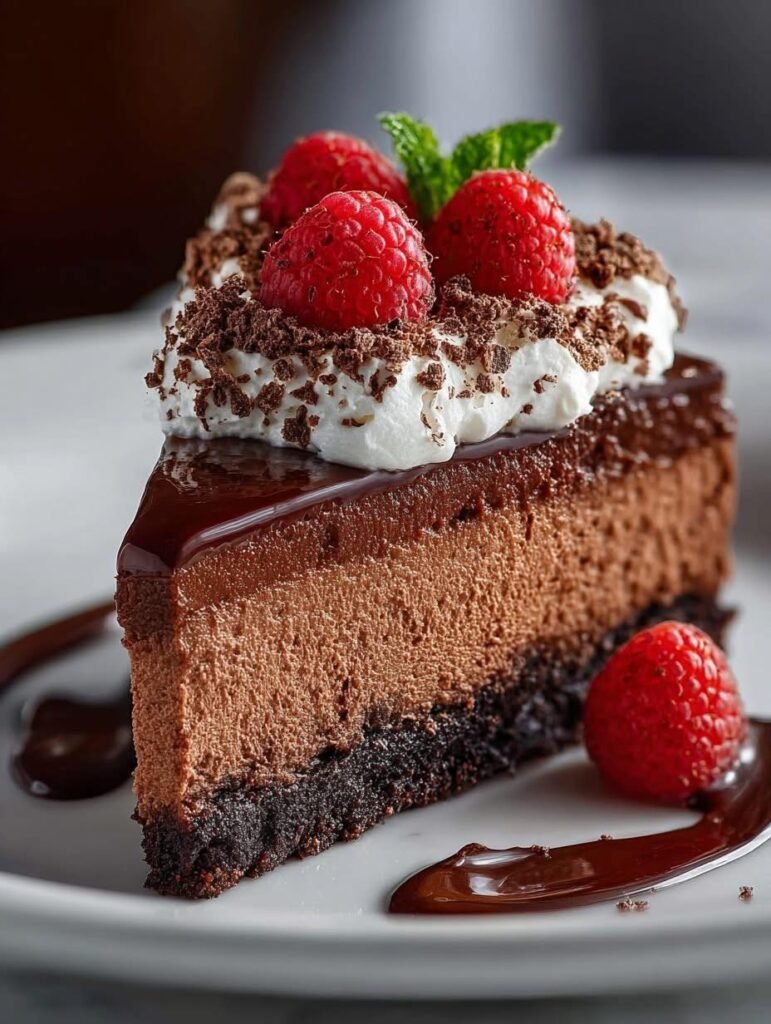
This chocolate Valentine’s day cheesecake delivers pure indulgence by combining a crunchy chocolate cookie crust with an ultra-rich, velvety filling made from cream cheese, melted dark chocolate, and cocoa powder that bakes into a dense, decadent dessert perfect for celebrating romance. The technique involves creating a sturdy chocolate base, then blending a silky chocolate cheesecake filling that incorporates both melted chocolate and cocoa powder for deep, complex chocolate flavor before baking gently and cooling slowly to prevent cracks. With its dramatic dark color, luxurious texture, and intense chocolate character that appeals to serious chocolate lovers, this cheesecake transforms simple ingredients into an impressive celebration dessert that communicates thoughtfulness and effort worthy of Valentine’s Day or any special romantic occasion.
Why You’ll Love This Recipe
Double Chocolate Intensity – Both melted chocolate and cocoa powder create deeper, more complex chocolate flavor than using just one would provide, satisfying serious chocolate cravings.
Valentine’s Day Perfect – The rich, romantic chocolate profile and elegant presentation make this ideal for celebrating love without requiring elaborate decorating or advanced pastry skills.
Impressive Yet Achievable – Despite looking and tasting like professional pastry, this cheesecake uses straightforward mixing and baking techniques that confident home bakers can master successfully.
Make-Ahead Essential – The mandatory overnight refrigeration means you must prepare this in advance, which actually reduces stress by eliminating last-minute dessert preparation on the day of celebration.
Crack-Prevention Method – The gradual cooling process built into the recipe prevents the surface cracks that plague many cheesecakes, ensuring beautiful presentation every time.
Versatile Serving Options – The rich base welcomes various toppings and garnishes that allow customization based on preference while the cheesecake itself remains consistently delicious.
Ingredients You’ll Need
For the Chocolate Cookie Base
1.5 cups chocolate cookie crumbs – Provides the crunchy foundation with chocolate flavor that complements the filling, using Oreos (with filling removed), chocolate graham crackers, or similar cookies.
⅓ cup melted butter – Binds the cookie crumbs together into a cohesive crust that holds its shape during baking and slicing while adding rich, dairy flavor.
For the Chocolate Cheesecake Filling
680g cream cheese (at room temperature) – Creates the signature tangy, creamy base that defines cheesecake texture, with room temperature being essential for smooth mixing without lumps.
1 cup granulated sugar – Sweetens the tangy cream cheese and contributes to proper texture by interfering with protein bonding that would otherwise make the filling too dense.
3 eggs (at room temperature) – Binds the filling and provides structure through their proteins while room temperature ensures they incorporate smoothly without curdling the mixture.
¾ cup heavy cream or strained yogurt – Adds richness and creates ultra-creamy texture, with heavy cream producing the most luxurious result though yogurt offers tangier, slightly lighter alternative.
225g dark or semi-sweet chocolate, melted and cooled – Delivers intense chocolate flavor and contributes to the filling’s color and richness, with cooling preventing it from scrambling the eggs when added.
2 tablespoons cocoa powder – Reinforces the chocolate flavor and adds depth that melted chocolate alone cannot achieve, while also contributing to the dramatic dark color.
1 teaspoon vanilla extract – Enhances all the other flavors and adds aromatic complexity that rounds out the chocolate profile without being distinctly identifiable.
¼ teaspoon salt – Balances the sweetness and enhances the chocolate flavor by providing contrast that makes the cocoa notes more pronounced and complex.
Step-by-Step Instructions
Preheat Oven and Prepare Pan Set your oven to 160°C (320°F) and let it preheat thoroughly. Line the bottom of a 22-23cm (approximately 9-inch) springform pan with parchment paper, cutting it to fit precisely, and optionally wrap the outside of the pan with aluminum foil to prevent any potential leaking.
Make the Chocolate Cookie Crust In a medium bowl, combine the chocolate cookie crumbs with the melted butter, stirring until all the crumbs are evenly moistened and the mixture resembles wet sand that holds together when squeezed. Press this mixture firmly and evenly into the bottom of the prepared springform pan, using the bottom of a glass or measuring cup to create a compact, uniform layer.
Pre-Bake the Crust Increase the oven temperature to 180°C (350°F) temporarily and bake the crust for 10 minutes to set it and develop its structure. Remove from the oven and let it cool while you prepare the filling, reducing the oven temperature back to 160°C (320°F).
Beat the Cream Cheese In a large mixing bowl using an electric mixer on medium speed, beat the room-temperature cream cheese for 2-3 minutes until it’s completely smooth, fluffy, and free of any lumps. Scrape down the sides of the bowl frequently to ensure even mixing throughout.
Add Sugar and Wet Ingredients Add the granulated sugar to the cream cheese and beat briefly until just combined, then mix in the heavy cream (or strained yogurt), vanilla extract, cocoa powder, and salt. Beat on low to medium speed until everything is uniformly incorporated and smooth.
Incorporate Eggs Gently Add the eggs one at a time to the cream cheese mixture, beating on low speed after each addition just until it disappears into the batter. Avoid overmixing at this stage, which would incorporate excess air that can cause cracking during baking.
Fold in Melted Chocolate Pour the melted and slightly cooled chocolate into the filling mixture and mix on low speed just until it’s completely incorporated and the filling is uniform in color with no streaks. The chocolate should be cool enough that it doesn’t melt the other ingredients but still fluid enough to mix smoothly.
Assemble and Prepare for Baking Pour the chocolate cheesecake filling over the pre-baked crust in the springform pan, using a spatula to spread it evenly to the edges. Tap the pan gently on the counter several times to release any large air bubbles trapped in the filling that could create holes.
Bake with Gentle Heat Place the springform pan in the preheated 160°C (320°F) oven and bake for 50-60 minutes. The cheesecake is done when the edges are set and slightly puffed but the center still jiggles noticeably when you gently shake the pan—it should move like thick gelatin, not liquid, but shouldn’t be completely firm.
Cool Gradually in Oven Turn off the oven but leave the cheesecake inside with the door propped open slightly (use a wooden spoon to keep it ajar). Let the cheesecake cool gradually in this warm environment for 1 hour, which prevents sudden temperature changes that cause cracking.
Refrigerate Overnight After the oven cooling period, remove the cheesecake and let it cool to room temperature, then cover it with plastic wrap or foil and refrigerate for at least 4 hours, preferably overnight. This extended chilling allows the filling to set completely and the flavors to develop and meld together.
Unmold and Serve Run a thin knife around the edge of the pan to loosen the cheesecake before releasing the springform sides. Transfer to a serving plate and top with your choice of garnishes—chocolate ganache, fresh berries, powdered sugar, or grated chocolate—before slicing and serving chilled.
Recipe Notes & Tips
Room Temperature Ingredients – Bringing cream cheese and eggs to room temperature (about 1 hour on the counter) is essential for smooth mixing and preventing lumps in the finished filling.
Chocolate Cooling – Let melted chocolate cool to barely warm or room temperature before adding to prevent it from seizing or scrambling the eggs in the filling.
Cookie Crumb Options – Oreos work beautifully if you scrape out the filling first; chocolate graham crackers or chocolate wafer cookies are also excellent choices.
Preventing Cracks – Beyond the gradual cooling, avoid overmixing after adding eggs, don’t overbake, and ensure your oven temperature is accurate using an oven thermometer.
Doneness Testing – The center should jiggle but not slosh when gently shaken; it will continue setting as it cools, so slightly underbaked is better than overbaked.
Overnight Benefits – While 4 hours is the minimum, overnight refrigeration produces superior texture and allows flavors to develop more fully.
Nutritional Information
Prep Time: 30 minutes
Cook Time: 60 minutes (10 minutes crust + 50-60 minutes filling)
Cooling Time: 1 hour in oven + 4 hours minimum refrigeration
Total Time: Approximately 6 hours (plus overnight refrigeration recommended)
Servings: 12 slices
Calories: Approximately 450-500 calories per slice (varies based on toppings)
Perfect Pairings
Fresh Berries – Strawberries or raspberries provide tart, fresh contrast that cuts through the rich chocolate and adds vibrant color for Valentine’s presentation.
Chocolate Ganache – A mirror-smooth ganache drizzle pushes the chocolate intensity even further for true chocolate devotees who want maximum indulgence.
Whipped Cream – Lightly sweetened whipped cream offers creamy lightness that balances the dense cheesecake without competing with the chocolate flavor.
Espresso or Coffee – Strong coffee complements chocolate beautifully while its bitterness provides palate-cleansing contrast between rich, sweet bites.
Ideal Occasions
Valentine’s Day Celebration – The romantic chocolate profile and impressive presentation make this the perfect dessert for celebrating love and showing thoughtfulness.
Anniversary Dinners – The special occasion dessert communicates effort and care appropriate for marking relationship milestones with something memorable.
Chocolate Lover’s Birthday – For those who prefer chocolate over traditional vanilla cake, this cheesecake delivers intense chocolate satisfaction in elegant form.
Romantic Proposals – When planning to propose, serving a homemade chocolate cheesecake demonstrates commitment and thoughtfulness before the big question.
Storage & Serving Tips
Refrigerator Storage – Keep the cheesecake covered in the refrigerator for up to 5 days, though it’s best within the first 3 days while the texture remains optimal.
Freezing Instructions – Freeze the whole cheesecake or individual slices wrapped tightly in plastic wrap then aluminum foil for up to 2 months; thaw overnight in the refrigerator before serving.
Slicing Cleanly – Use a sharp knife dipped in hot water and wiped dry between cuts to slice through the dense filling cleanly without dragging or smearing.
Serving Temperature – Remove the cheesecake from the refrigerator 15-20 minutes before serving to take the chill off slightly, which allows the flavors to come through more clearly.
Creative Variations to Try
White Chocolate Raspberry – Replace dark chocolate with white chocolate and swirl raspberry puree through the filling for fruity elegance.
Salted Caramel – Drizzle salted caramel sauce over the top and sprinkle with flaky sea salt for sweet-salty complexity.
Peppermint Chocolate – Add ½ teaspoon of peppermint extract to the filling and top with crushed candy canes for festive winter variation.
Chocolate Orange – Add 1 tablespoon of orange zest to the filling and serve with candied orange slices for sophisticated citrus-chocolate pairing.
Troubleshooting Common Issues
Cracked Surface – This results from sudden temperature changes, overbaking, or overmixing; follow the gradual cooling method and mix gently after adding eggs.
Sunken Center – Underbaking or opening the oven door too early causes collapse; ensure proper baking time and resist peeking until nearly done.
Grainy Texture – Cold cream cheese that doesn’t blend smoothly creates graininess; ensure all dairy is truly room temperature before mixing.
Soggy Crust – Insufficient pre-baking or too much butter in the crust causes this; ensure the crust bakes fully and use the specified butter amount.
Why This Recipe Works
The success of this chocolate Valentine’s Day cheesecake relies on understanding proper cheesecake technique and how to incorporate chocolate successfully without compromising texture. Bringing cream cheese to room temperature allows it to blend smoothly without lumps that would create grainy texture in the finished cheesecake. Beating the cream cheese thoroughly before adding other ingredients incorporates air that contributes to creamy texture while also ensuring no lumps remain. Adding eggs one at a time on low speed prevents overmixing that would incorporate excessive air, which expands during baking then contracts during cooling, causing cracks. Using both melted chocolate and cocoa powder creates more intense, complex chocolate flavor than either ingredient alone would provide—the melted chocolate contributes smooth richness while cocoa powder adds deep, concentrated chocolate character. Cooling the melted chocolate before adding prevents it from scrambling the eggs or melting the other ingredients, which would compromise texture. Pre-baking the crust sets it and prevents sogginess from the moist filling while also developing its structure and flavor. Baking at moderate 160°C (320°F) allows the filling to cook gently and evenly without the surface setting too quickly and cracking from internal pressure. The jiggling center indicates proper doneness—the residual heat will continue cooking it during the gradual cooling process. Cooling slowly in the turned-off oven prevents sudden temperature shock that causes the surface to contract and crack. The extended refrigeration allows the filling to set completely and firm up while also letting flavors meld and develop more fully. At approximately 450-500 calories per slice, this cheesecake is undeniably rich and indulgent, designed as special occasion dessert rather than everyday fare, though the reasonable portion sizes and genuine satisfaction mean a single slice suffices without needing seconds.
Final Thoughts
Chocolate Valentine’s Day cheesecake demonstrates how classic dessert techniques executed properly can create spectacular results that communicate care, effort, and thoughtfulness—exactly what special occasions call for. This recipe proves that impressive celebration desserts don’t require professional training or specialized equipment when you understand fundamental principles and follow instructions carefully. The make-ahead requirement actually benefits home cooks by eliminating last-minute stress and allowing you to enjoy the celebration rather than worrying about dessert timing. While this cheesecake is certainly rich and best enjoyed in moderation, Valentine’s Day and similar romantic occasions are exactly when indulgent desserts are appropriate and appreciated, and the genuine pleasure it brings to the table often matters more than nutritional analysis when the goal is celebrating love and creating happy memories together.